Se habla español

Light enters the eye through the cornea and lens, which work together to focus images on a thin, delicate layer at the back of the eye called the retina. The retina contains millions of photoreceptors — rods and cones — that convert light into electrical signals, which are then transmitted to the brain to create the images we see. When this system is intact, vision is sharp, detailed, and richly colored.
Retinal detachment occurs when that light-sensitive layer separates from the underlying supportive tissue that supplies oxygen and nutrients. Because the retina relies on close contact with that underlying layer to function, any separation can interrupt the flow of signals and produce sudden changes in vision. Left untreated, a detached retina can result in lasting vision loss.
Understanding how detachment happens, what to watch for, and how specialists approach diagnosis and treatment helps people make informed choices quickly. Dr. Neel Lamba and the team at Next Level Retina emphasize timely evaluation and evidence-based care to preserve vision whenever possible.
A retinal detachment is not a single, predictable event — it can be small and limited to the peripheral retina, or it can expand to involve the central retina and macula, which is responsible for fine, central vision. When the macula becomes involved, reading, recognizing faces, and performing detail-oriented tasks can become difficult. Even detachments that begin at the edge of the retina can progress rapidly if left unchecked.
Detachment interrupts the normal interaction between the retina and the blood supply beneath it. Photoreceptors deprived of essential nutrients start to malfunction, and the visual consequences can move from flashes and floaters to a shadow or curtain moving across the field of vision. The extent of visual recovery depends on how quickly the retina is repaired and whether the macula was affected.
Because the progression and outcome vary, every suspected detachment is treated as an urgent concern. Early recognition and referral to a retina specialist improve the chance of successful reattachment and a better visual result, which is why prompt evaluation matters so much.
Age-related changes in the vitreous — the gel that fills the eye — are a frequent precipitant of retinal tears and subsequent detachment. As the vitreous liquefies and shrinks with time, it can pull on the retina and produce a tear. Traumatic events, such as blunt force to the eye, can create similar tears or make an existing weakness progress to a detachment.
Several medical and anatomical factors raise an individual’s risk. High myopia (severe nearsightedness) stretches the eye and thins the peripheral retina, increasing susceptibility. Prior eye surgery, including some cataract procedures, a family history of detachment, and certain retinal disorders such as lattice degeneration all contribute to higher likelihood of problems.
Systemic conditions that affect the blood vessels of the eye, such as diabetic retinopathy, can also set the stage for traction or exudative detachments. Knowing these risk factors allows clinicians to monitor vulnerable patients more closely and consider preemptive treatment for retinal tears before a full detachment occurs.
Retinal detachment often announces itself with sudden visual changes. The most commonly reported early symptoms include a new shower of floaters — tiny specks or threads that drift through the field of vision — and the sudden onset of flashing lights, especially in the peripheral vision. These flashes are typically photopsias caused by traction on the retina.
If a dark shadow or curtain develops and progressively blocks part of the vision, this frequently indicates that a detachment has advanced. Some people describe a gradual loss of peripheral vision or a central blur that makes detailed tasks difficult. Blurred vision that appears rapidly, particularly when accompanied by floaters or flashes, should prompt an urgent retinal exam.
Not every visual disturbance represents a detachment, but because timing affects outcomes, any new, unexplained visual symptom should be evaluated without delay. Early detection allows for less invasive interventions in many cases and can preserve more of the patient’s baseline vision.
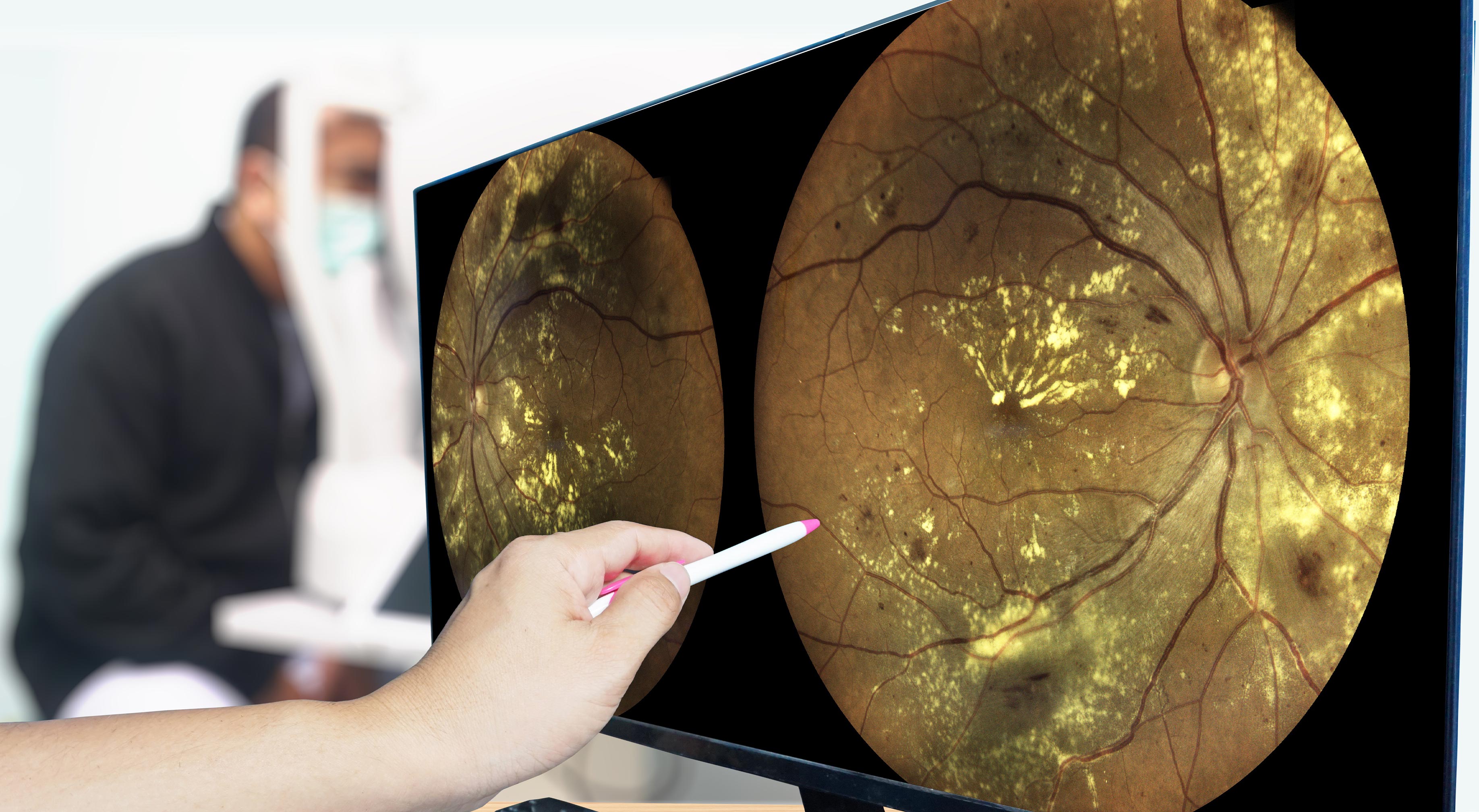
Diagnosis begins with a focused history and a dilated, comprehensive eye examination. Dilation allows the retina specialist to view the entire retina with specialized lenses or a two-headed indirect ophthalmoscope. Careful inspection can reveal retinal tears, holes, or areas where the retina has separated from the underlying tissue.
Advanced imaging tools complement the clinical exam. Optical coherence tomography (OCT) provides cross-sectional images that are particularly useful for evaluating whether the macula is involved and for guiding prognosis. B-scan ultrasonography is helpful when the view of the retina is obstructed by blood or dense cataract and can detect the presence and location of a detachment.
Accurate mapping of the detachment’s size, location, and cause is essential to determine the most appropriate treatment strategy. The specialist will explain the findings and discuss options so the patient understands the rationale behind the recommended approach.
Treatment aims to reattach the retina and close any causative tears while minimizing additional trauma. Several well-established surgical options exist. Pneumatic retinopexy involves placing a gas bubble in the eye to push the retina back into place while sealing the tear with laser or cryotherapy. A scleral buckle uses an external silicone band to indent the eye wall and reduce traction, and a vitrectomy removes the vitreous gel, relieves internal traction, and allows the surgeon to reattach the retina directly.
The choice of procedure depends on the detachment’s characteristics — size, location, and whether the macula is involved — as well as the patient’s overall eye health. In some cases, a combination of techniques yields the best outcome. Most surgeries are performed as outpatient procedures, but follow-up is intensive and tailored to the individual case.
Recovery is variable. Vision often improves gradually over weeks to months as the retina and photoreceptors recover, and patients may notice distortion or reduced acuity during the healing phase. Activity restrictions, positioning after surgery, and close postoperative monitoring help optimize results. Your retina specialist will outline realistic expectations and a recovery plan based on the chosen treatment.
While not all detachments can be prevented, certain measures lower overall risk. Regular, dilated eye exams are the cornerstones of prevention for people with known risk factors, because they allow detection and treatment of retinal tears or degenerations before a full detachment occurs. People with high myopia, a family history of detachments, or prior retinal issues should maintain a schedule of exams recommended by their retina specialist.
Protective eyewear during sports and occupational activities reduces the chance of traumatic injury that could precipitate a detachment. For patients who have had a tear detected but not yet detached, prophylactic laser or cryotherapy can often secure the retina and prevent progression. Open communication about new visual symptoms also plays a critical role in early intervention.
Long-term visual health depends on a partnership between the patient and their retinal care team. Prompt reporting of symptoms, adherence to follow-up appointments, and lifestyle adjustments as advised by the specialist contribute to the best possible outcomes.
Retinal detachment is a serious condition, but with rapid assessment and modern surgical techniques many patients can achieve successful reattachment and retain useful vision. If you have new flashes, floaters, a shadow in your vision, or any sudden change in sight, seek evaluation right away. To learn more about our approach and whether you may be at risk, contact Next Level Retina for more information.
The retina is a thin, light-sensitive layer at the back of the eye that converts light into electrical signals for the brain. A retinal detachment occurs when the retina separates from the underlying tissue that provides oxygen and nutrients, disrupting normal vision. This separation can cause sudden changes in sight and, if untreated, may lead to permanent vision loss.
Detachments vary in size and location and may involve the macula, the area responsible for sharp central vision. Types include rhegmatogenous detachments caused by retinal tears, tractional detachments from pulling forces, and exudative detachments due to fluid accumulation. Understanding the type and extent of detachment helps guide timely diagnosis and treatment decisions.
Common early symptoms include a sudden increase in floaters, flashes of light, or the sensation of a curtain or shadow moving across part of the visual field. These signs often start in the peripheral vision and may progress toward the center, causing blurring or loss of parts of the visual field. Any abrupt, unexplained change in vision should be evaluated promptly because time affects the likelihood of preserving sight.
Not every floater or flash indicates a detachment, but rapid onset or clustering of these symptoms increases concern. Patients who notice a new shadow, a rapid decline in vision, or a pattern of worsening symptoms should seek urgent retinal assessment. Early evaluation often allows less invasive treatment and a better prognosis.
Retinal detachment commonly follows age-related changes in the vitreous gel, which can shrink or tug on the retina and create tears. Other risk factors include high myopia (severe nearsightedness), prior eye surgery such as cataract extraction, blunt eye trauma, and certain degenerative retinal conditions like lattice degeneration. A family history of detachment also raises the likelihood of occurrence.
Systemic eye diseases such as proliferative diabetic retinopathy can lead to tractional detachments, while inflammatory or vascular conditions may cause exudative detachments. People with multiple risk factors require closer monitoring and a personalized follow-up schedule to detect and treat retinal tears before they progress to full detachments. Preventive measures and early intervention depend on recognizing these underlying risks.
Diagnosis begins with a detailed history and a dilated, comprehensive eye examination using specialized lenses or indirect ophthalmoscopy to inspect the retina. Imaging tests such as optical coherence tomography (OCT) provide high-resolution cross-sectional views that are particularly useful for assessing macular involvement. B-scan ultrasonography is valuable when media opacities like dense cataract or vitreous hemorrhage prevent direct visualization of the retina.
An accurate map of the detachment’s size, location, and any causative tears guides treatment planning and prognosis. An experienced vitreoretinal surgeon, including specialists trained in advanced techniques, integrates clinical findings and imaging to recommend the most appropriate approach. Clear communication about the exam results helps patients understand the urgency and options for repair.
Treatment aims to reattach the retina and seal any retinal breaks while minimizing additional trauma. Common surgical options include pneumatic retinopexy, which uses a gas bubble to reposition the retina combined with laser or cryotherapy to close tears; scleral buckle, which indents the eye wall to reduce traction; and pars plana vitrectomy, which removes vitreous traction and allows direct repair of the retina. Surgeons may use a single technique or a combination depending on the detachment’s characteristics.
The choice of procedure depends on factors such as the detachment’s size and location, whether the macula is involved, and the patient’s overall ocular health. Most procedures are performed on an outpatient basis, but postoperative monitoring is essential to confirm reattachment and manage any complications. Your retina specialist will discuss the rationale for the recommended operation and set realistic expectations for recovery.
Recovery varies by procedure but typically involves a period of close monitoring and activity modifications. Vision often improves gradually over weeks to months as the retina heals and the eye adjusts, and patients may notice blurring, distortion, or fluctuating acuity during this phase. Specific postoperative instructions—such as head positioning when a gas bubble is used—are important for surgical success and will be tailored to the chosen repair.
Follow-up visits are scheduled frequently in the early postoperative period to assess attachment status and intraocular pressure, and to detect complications such as infection, cataract formation, or recurrent detachment. Additional procedures are sometimes necessary to achieve stable reattachment or to manage secondary issues. Clear communication with your retinal care team supports the best possible visual outcome.
Not all detachments can be prevented, but certain measures reduce overall risk and improve early detection. Regular dilated eye examinations are the cornerstone of prevention for people with known risk factors, because retina specialists can identify and treat retinal tears or degenerations before a full detachment occurs. Prophylactic laser or cryotherapy can often secure areas of weakness and prevent progression in selected cases.
Protective eyewear during sports and hazardous work helps prevent traumatic injuries that can precipitate detachment. Prompt reporting of new floaters, flashes, or visual shadows allows rapid assessment and intervention when needed. A partnership between the patient and their retinal specialist supports long-term retinal health.
Retinal detachment is considered an urgent ophthalmic condition because the chance of preserving central vision declines over time, especially if the macula becomes involved. Prompt evaluation by a retina specialist and timely surgical repair significantly improve the likelihood of reattachment and better visual recovery. Delaying care can allow the detachment to expand and reduce the potential for a favorable outcome.
If you experience sudden floaters, flashes, or a shadow in your vision, seek immediate assessment from an eye care professional. Next Level Retina prioritizes timely evaluation for suspected detachments to maximize the chance of successful treatment and to discuss appropriate next steps. Early attention is the most important factor under a patient’s control.
Complications after retinal detachment repair can include cataract progression, increased intraocular pressure, infection, bleeding, and the possibility of recurrent detachment. The specific risks vary with the type of surgery and the eye’s condition prior to repair, and your surgeon will review individualized risk factors before proceeding. Most complications are manageable with prompt detection and treatment, which is why close follow-up is essential.
Visual outcome depends largely on whether the macula was detached and on the duration of the detachment before repair. Some patients regain useful central vision while others may have lasting distortion or reduced acuity despite successful reattachment. Discussing realistic expectations with your retina specialist helps align goals for recovery and rehabilitation.
Postoperative follow-up typically begins within the first day or week after surgery and continues frequently over the first month, then at gradually increasing intervals as healing progresses. Early visits focus on confirming reattachment, monitoring intraocular pressure, and managing postoperative inflammation or positioning requirements. Your retina team will provide a personalized schedule based on the procedure performed and how your eye responds.
Long-term monitoring may be recommended for months to years because some patients face a risk of recurrent detachment or late complications. Return promptly if you notice new floaters, flashes, a decline in vision, or other concerning symptoms after surgery. Ongoing care with a retina specialist in Oak Brook or your local retinal provider helps protect visual function over time.
Phone:
Fax: